
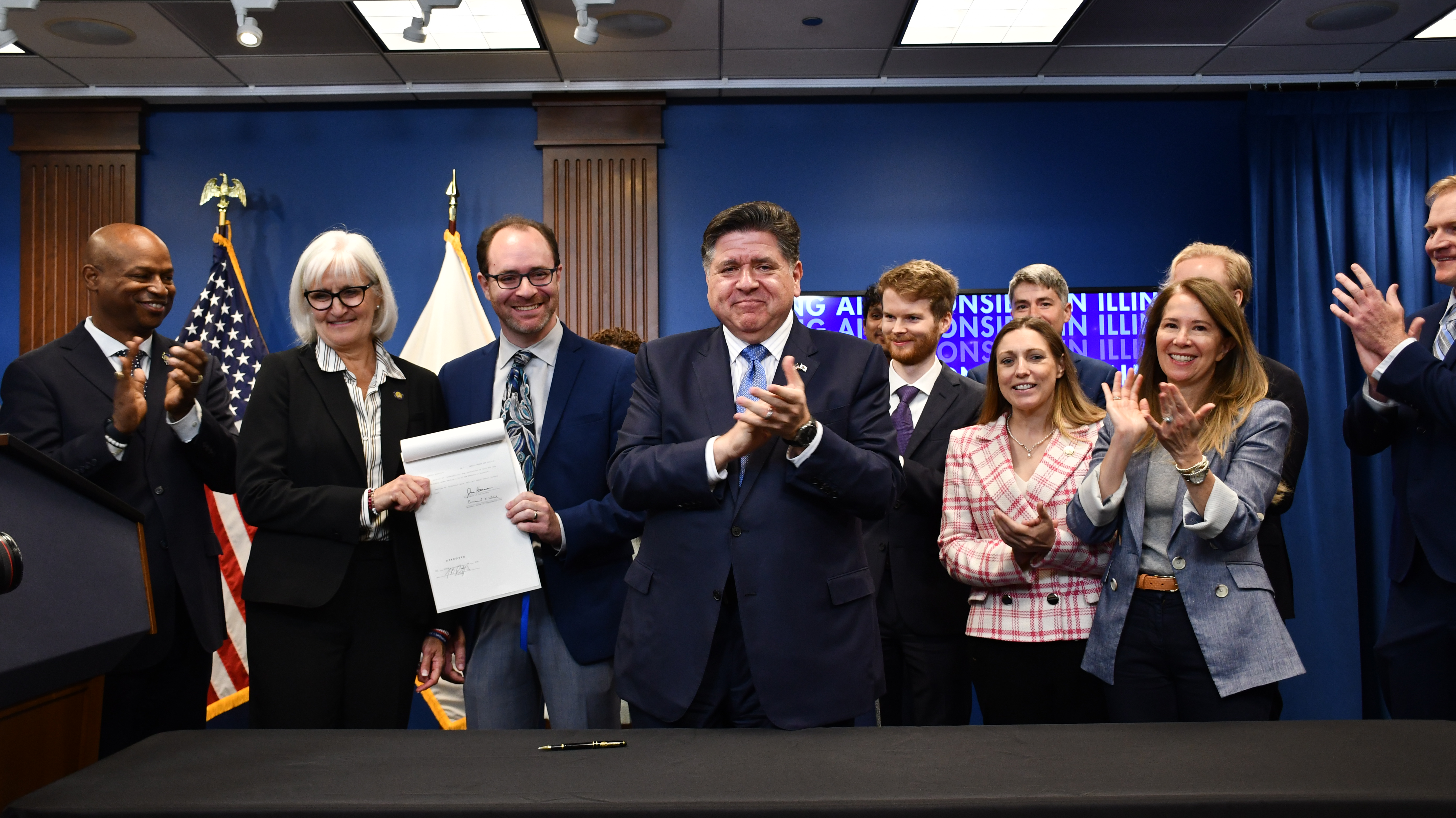
CHICAGO – In an effort to establish AI safety standards and transparency requirements, State Senator Rachel Ventura co-sponsored Senate Bill 315, which was signed into law Monday.
“With the rise of Artificial Intelligence in all aspects of our lives, coupled with the lack of oversight, we face a looming crisis,” said Ventura (D-Joliet). “This legislation sets a strong precedent to ensure AI developers abide by important safety standards and transparency in their processes.”
Senate Bill 315 requires large frontier AI developers – such as ChatGPT and Claude – to assess catastrophic risks, report critical safety incidents, undergo independent third-party audits and establish whistleblower protections for employees raising safety concerns.
Additionally, it requires frontier developers to report critical safety incidents to the Illinois Emergency Management Agency and the Office of the Attorney General within 72 hours, or within 24 hours if the incident poses an imminent risk of death or serious physical injury. This law directs IEMA, in consultation with the Illinois Attorney General, to establish a reporting mechanism for both developers and members of the public. Qualifying developers will also have to complete annual independent audits assessing compliance with the law and publish redacted audit reports.
“For too long, the public has had to simply trust that the most powerful AI developers are testing their systems responsibly. SB 315 replaces blind trust with verifiable disclosure,” said Steve Wimmer, Senior Technical and Policy Advisor for the Transparency Coalition. “Asking the largest frontier developers to assess catastrophic risks and report serious incidents isn't a burden on innovation; it's the baseline of accountability we already expect from every other high-impact industry.”
In addition to Senate Bill 315, Ventura also sponsored Senate Bill 317 – which awaits approval in the House. This bill would require any person or company using a conversational artificial intelligence system in a chat interface to communicate with a consumer during trade or commerce to provide the consumer with a clear and conspicuous disclosure at the beginning of the interaction that the consumer is communicating with an automated system and not with a human. This bill would also allow consumers who fail to receive the required disclosure and suffer damages as a result to bring legal action against the seller under the Consumer Fraud and Deceptive Business Practices Act.
Senate Bill 315 was signed Monday and will take effect Jan. 1, 2027.